Pinkeye From a Virus in Teens: Care Instructions
Overview
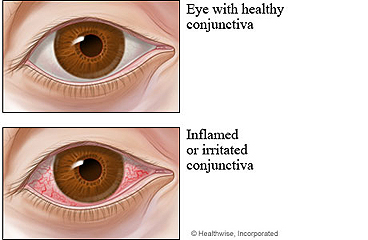
Pinkeye is a problem that many teens get. In pinkeye, the lining of your eyelid and the eye surface become
red and swollen. The lining is called the conjunctiva (say "kawn-junk-TY-vuh"). Pinkeye is also called
conjunctivitis (say "kun-JUNK-tih-VY-tus").
Pinkeye can be caused by bacteria, a virus, or an allergy.
Your pinkeye is caused by a virus. This type of pinkeye can spread quickly from person to person,
usually from touching.
Pinkeye caused by a virus usually gets better on its own in 7 to 10 days. But it can last longer. Antibiotics
do not help this type of pinkeye.
Follow-up care is a key part of your treatment and safety. Be sure to make and go to all
appointments, and call your doctor if you are having problems. It's also a good idea to know your test results
and keep a list of the medicines you take.
How can you care for yourself at home?
Make yourself comfortable
-
Use moist cotton or a clean, wet cloth to remove the crust from your eyes. Wipe from the inside corner of
your eye to the outside. Use a clean part of the cloth for each wipe.
-
Close your eyes and put cold or warm wet cloths on them a few times a day if your eyes hurt or are
itching.
-
Do not wear contact lenses until your pinkeye is gone. Clean the contacts and storage case.
-
If you wear disposable contacts, get out a new pair when your eyes have cleared and it is safe to wear
contacts again.
Prevent pinkeye from spreading
-
Wash your hands often. Always wash them before and after you treat pinkeye or touch your eyes or face.
-
Don't share towels, pillows, or washcloths while you have pinkeye. Use clean linens, towels, and
washcloths each day.
-
Do not share your contact lens equipment, containers, or solutions.
When should you call for help?
 Call your
doctor now or seek immediate medical care if:
Call your
doctor now or seek immediate medical care if:
Watch closely for changes in your health, and be sure to contact your doctor if:
Current as of: June 5, 2023
Content Version: 14.0
Care instructions adapted under license by your
healthcare professional. If you have questions about a medical condition or this instruction, always ask
your healthcare professional. Healthwise, Incorporated disclaims any warranty or liability for your use of
this information.