Learning About Atrial Fibrillation
What is atrial fibrillation?
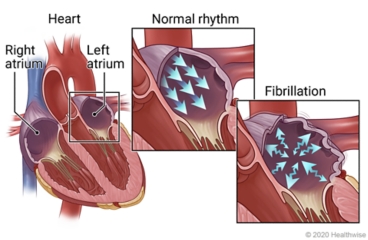
Atrial fibrillation (say "AY-tree-uhl fih-bruh-LAY-shun") is a common type of irregular heartbeat
(arrhythmia). Normally, the heart beats in a regular, steady rhythm. In atrial fibrillation, a problem with
the heart's electrical system causes the two upper chambers of the heart (called the atria) to quiver, or
fibrillate.
An episode of atrial fibrillation is not usually dangerous. But this condition can lead to problems. This is
because blood can collect, or pool, in your heart if the heartbeat isn't regular and steady. And pooled blood
is more likely to form clots. Clots can travel to the brain, block blood flow, and cause a stroke. Atrial
fibrillation can also lead to heart failure.
This condition also upsets the normal rhythm between the atria and the lower chambers of the heart. (These
chambers are called the ventricles.) The ventricles may beat fast and without a regular rhythm.
What are the symptoms?
Some people feel symptoms when they have episodes of atrial fibrillation. But other people don't notice any
symptoms.
If you have symptoms, you may feel:
You may notice signs of atrial fibrillation when you check your pulse. Your pulse may seem uneven or fast.
What can you expect when you have atrial fibrillation?
At first, episodes of atrial fibrillation may come on suddenly and last a short time. They may go away on
their own or with treatment. Over time, the episodes may last longer and occur more often. If this continues,
they may not go away on their own.
How is it treated?
Treatments can help you feel better and prevent future problems, especially stroke and heart failure.
Your treatment may depend on the cause of your atrial fibrillation, your symptoms, your risk for stroke, and
your preferences. Types of treatment include:
-
Heart rate treatment. Medicine may be used to slow your heart rate. Your heartbeat may still be
irregular. But these medicines keep your heart from beating too fast. They may also help relieve symptoms.
-
Heart rhythm treatment. Different treatments may be used to try to stop atrial fibrillation and
keep it from returning. They can also relieve symptoms. These treatments include:
-
Stroke prevention. You and your doctor can decide how to lower your risk. You may decide to take a
blood-thinning medicine called an anticoagulant.
What is a heart-healthy lifestyle for atrial fibrillation?
A heart-healthy lifestyle can help you live well and manage atrial fibrillation. This lifestyle may help
reduce how often you have symptoms.
-
Try to quit or cut back on smoking and using other nicotine products.
-
Try to get at least 30 minutes of physical activity on most days of the week. Talk to your doctor about
what type and level of exercise is safe for you.
-
Eat heart-healthy foods. These include vegetables, fruits, nuts, beans, lean meat, fish, and whole grains.
Limit sodium, alcohol, and sugar.
-
Avoid alcohol if it triggers symptoms.
-
Stay at a weight that is healthy for you. Talk to your doctor if you need help losing weight.
-
Try to get 7 to 9 hours of sleep each night.
-
Manage other health problems. These include high blood pressure, high cholesterol, and diabetes. If you
think you may have a problem with alcohol or drug use, talk to your doctor.
Current as of: June 24, 2023
Content Version: 14.0
Care instructions adapted under license by your
healthcare professional. If you have questions about a medical condition or this instruction, always ask
your healthcare professional. Healthwise, Incorporated disclaims any warranty or liability for your use of
this information.