Learning About Cardioversion
What is cardioversion?
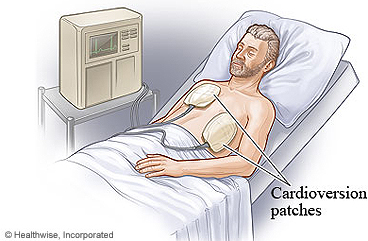
Cardioversion is a treatment that helps your heart return to a normal rhythm. It treats problems like atrial
fibrillation.
It is also sometimes used in emergencies. It can correct a fast heartbeat that causes low blood pressure,
chest pain, or heart failure.
Cardioversion can be done by using an electric current or medicines.
What are the types of cardioversion?
There are two types:
Electrical cardioversion
The electrical procedure is done in a hospital. Before the treatment, you will get medicine to make you
sleepy. You should not feel any pain.
Your doctor will put patches on your chest or back. The patches send an electric current to your heart. This
resets your heart rhythm.
The electrical part takes about 5 minutes. But you may be in the hospital for a few hours. You will need to
recover from the effects of the sedative medicine.
Chemical cardioversion
The chemical procedure is most often done in a hospital. In most cases, the medicine is put into your arm
through a tube called an I.V. But you may get medicines to take by mouth.
You may feel a quick sting or pinch when the IV starts. The procedure may take up to several hours.
What can you expect after cardioversion?
-
You can usually go home the same day. You will need someone to drive you home.
-
Your doctor may have you take medicines daily. These help your heart beat normally and prevent blood
clots.
-
After electrical cardioversion, you may have redness where the patches were. This looks and feels like a
sunburn.
-
Abnormal heart rhythms sometimes come back after cardioversion.
Follow-up care is a key part of your treatment and safety. Be sure to make and go to all
appointments, and call your doctor if you are having problems. It's also a good idea to know your test results
and keep a list of the medicines you take.
Current as of: June 24, 2023
Content Version: 14.0
Care instructions adapted under license by your
healthcare professional. If you have questions about a medical condition or this instruction, always ask
your healthcare professional. Healthwise, Incorporated disclaims any warranty or liability for your use of
this information.