Brain Aneurysm Surgery (Clipping): What to Expect at Home
Your Recovery
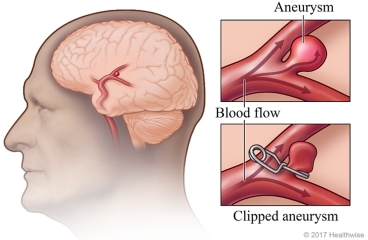
An aneurysm is a bulging, weak section of a blood vessel. Sometimes
aneurysms put pressure on nerves. They can also bleed or break open
(rupture). Surgery can fix an aneurysm in your brain. This can
prevent strokes, bleeding, and brain damage.
During brain aneurysm surgery, the doctor made cuts (incisions) in
your scalp and skull. Then the doctor placed a metal clip over the
weak area of your brain blood vessel. Then the doctor used metal
plates and clamps to put the piece of your skull back in place.
You will probably feel very tired for several weeks after this
surgery. You may also have headaches or problems concentrating for 1
to 2 weeks. It can take 4 to 8 weeks to fully recover.
The incisions may be sore for about 5 days after surgery. Your scalp
may swell with fluid. You may also have numbness and shooting pains
near your wound. You may have swelling and bruising around your
eyes. As your wound starts to heal, it may begin to itch. Medicines
and ice packs can help with headaches, pain, swelling, and itching.
During surgery, the incisions on your head were closed with small
metal plates or clamps. Some kinds of plates and clamps need to be
removed 7 to 10 days after surgery. If your head was shaved, you may
want to wear hats or scarves on your head until your hair grows
back. Or it may not bother you.
This care sheet gives you a general idea about how long it will take
for you to recover. But each person recovers at a different pace.
Follow the steps below to get better as quickly as possible.
How can you care for yourself at home?

Activity

Diet
|
|
-
You can eat your normal diet. If your stomach is upset,
try bland, low-fat foods like plain rice, broiled chicken,
toast, and yogurt.
|
|
|
|
|
|
|
|
|
-
You may notice that your bowel movements are not regular
right after your surgery. This is common. Try to avoid
constipation and straining with bowel movements. You may
want to take a fiber supplement every day. If you have not
had a bowel movement after a couple of days, ask your
doctor about taking a mild laxative.
|

Medicines

Incision
care

Exercise
|
|
|
|
|
-
Avoid strenuous activities, such as bicycle riding,
jogging, weight lifting, or aerobic exercise, for 3 months
or until your doctor says it is okay.
|
|
|
|

Ice
|
|
-
For the first 1 or 2 days, you can use ice to reduce pain,
swelling, and itching. Put ice or a cold pack on your head
for 10 to 20 minutes at a time. Put a thin cloth between
the ice and your skin.
|
Follow-up care is a key part of your treatment and safety. Be
sure to make and go to all appointments, and call your doctor if you
are having problems. It's also a good idea to know your test results
and keep a list of the medicines you take.
When should you call for help?
 Call 911 anytime you think you may need emergency care.
For example, call if:
Call 911 anytime you think you may need emergency care.
For example, call if:
Call your doctor now or seek immediate medical care if:
Watch closely for changes in your health, and be sure to contact
your doctor if you have any problems.
Current as of: August 6, 2023
Content Version: 14.0
Care instructions adapted under license by your healthcare professional. If you have questions about a medical condition or this instruction, always ask your healthcare professional. Healthwise, Incorporated disclaims any warranty or liability for your use of this information.