Cervicitis: Care Instructions
Overview
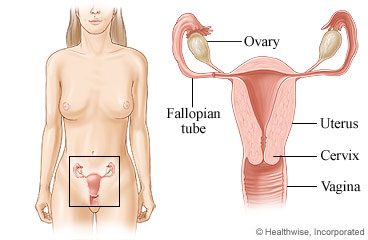
Cervicitis means that your cervix is inflamed. The cervix is the part of your uterus that opens into your
vagina.
This problem is most often caused by an infection. Some people get it after they have a sexually transmitted
infection (STI), such as gonorrhea and chlamydia. It can also be caused by irritation from some types of birth
control. Two examples are the cervical cap or diaphragm. Your doctor may do some tests to help find the cause
of the problem.
It is very important to treat cervicitis. If you don't, you could have serious health problems. For this
reason, you may need a test after your treatment to make sure the infection is gone.
Follow-up care is a key part of your treatment and safety. Be sure to make and go to all
appointments, and call your doctor if you are having problems. It's also a good idea to know your test results
and keep a list of the medicines you take.
How can you care for yourself at home?
-
Take your antibiotics as directed. Do not stop taking them just because you feel better. You need to take
the full course of antibiotics.
-
If your doctor prescribed antifungal medicine, use it as directed.
-
While you are being treated, do not have sex. If your treatment is one dose of antibiotics, wait at least
7 days after you take your medicine before you have any kind of sexual contact. Even if you use a condom,
you could get infected again.
-
It's important to tell any sex partners that you have cervicitis. It may be related to an STI. Sex
partners should get tested and then treated if they have an STI. This is true even if they don't have
symptoms.
-
Do not douche. It can change the normal balance of substances in your vagina.
-
Do not use tampons while you are being treated.
To prevent STIs
-
Use condoms every time you have sex. Use them from the start to the end of sexual contact.
-
Talk to any partners before you have sex. Find out if they have or are at risk for any sexually
transmitted infection (STI). Keep in mind that a person may be able to spread an STI even if they don't have
symptoms.
-
Do not have sex with anyone who has symptoms of an STI. These include sores on the genitals or mouth.
-
Having one sex partner (who does not have STIs and does not have sex with anyone else) can reduce your
risk of getting STIs.
When should you call for help?
 Call your
doctor now or seek immediate medical care if:
Call your
doctor now or seek immediate medical care if:
Watch closely for changes in your health, and be sure to contact your doctor if:
Current as of: November 27, 2023
Content Version: 14.0
Care instructions adapted under license by your
healthcare professional. If you have questions about a medical condition or this instruction, always ask
your healthcare professional. Healthwise, Incorporated disclaims any warranty or liability for your use of
this information.