Asthma Attack in Children: Care Instructions
Overview
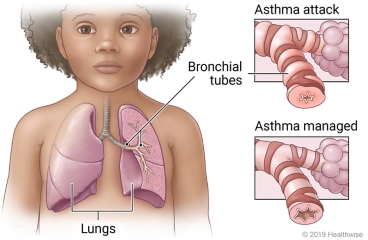
During an asthma attack, the airways swell and narrow. This makes it hard for your child to breathe. Severe
asthma attacks can be dangerous. But you can help prevent these attacks by keeping your child's asthma under
control and treating symptoms before they get bad. Symptoms include being short of breath, having chest
tightness, coughing, and wheezing. Noting and treating these symptoms can also help you avoid trips to the
emergency room.
If you notice that your child has any problems or new symptoms, get medical treatment right away.
Follow-up care is a key part of your child's treatment and safety. Be sure to make and go to all
appointments, and call your doctor if your child is having problems. It's also a good idea to know your
child's test results and keep a list of the medicines your child takes.
How can you care for your child at home?
Follow an action plan
-
Make and follow an asthma action plan. It lists the medicines your child takes every day and will show you
what to do if your child has an attack.
-
Work with a doctor to make a plan if your child doesn't have one. Make treatment part of daily life.
-
Tell teachers and coaches that your child has asthma. Give them a copy of your child's asthma action plan.
Take medications correctly
Check your child's breathing
-
If your child has a peak flow meter, use it to check how well your child is breathing. This can help you
predict when an asthma attack is going to occur. Then your child can take medicine to prevent the asthma
attack or make it less severe. Most children age 5 and older can learn how to use this meter.
Avoid asthma triggers
-
Keep your child away from smoke. Do not smoke around your child or in your house, and avoid being around
others who are smoking.
-
Try to learn what triggers your child's asthma attacks. Then avoid the triggers when you can. Common
triggers include colds, smoke, air pollution, pollen, mold, pets, cockroaches, stress, and cold air.
-
Make sure your child is up to date on their COVID-19 and other immunizations and gets a yearly flu
vaccine.
When should you call for help?
 Call 911
anytime you think your child may need emergency care. For example, call if:
Call 911
anytime you think your child may need emergency care. For example, call if:
Call your doctor now or seek immediate medical care if:
Watch closely for changes in your child's health, and be sure to contact your doctor if:
Current as of: August 6, 2023
Content Version: 14.0
Care instructions adapted under license by your
healthcare professional. If you have questions about a medical condition or this instruction, always ask
your healthcare professional. Healthwise, Incorporated disclaims any warranty or liability for your use of
this information.