Allergic Reaction: Care Instructions
Overview
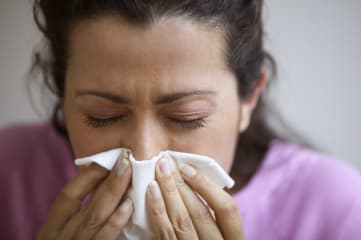
An allergic reaction is an excessive response from your immune system to a medicine, chemical, food,
insect bite, or other substance. A reaction can range from mild to life-threatening. Some people
have a mild rash, hives, and itching or stomach cramps. In severe reactions, swelling of your tongue
and throat can close up your airway so that you cannot breathe.
Follow-up care is a key part of your treatment and safety. Be sure to make and go to all
appointments, and call your doctor if you are having problems. It's also a good idea to know your
test results and keep a list of the medicines you take.
How can you care for yourself at home?
-
If you know what caused your allergic reaction, be sure to avoid it. Your allergy may become
more severe each time you have a reaction.
-
Take an over-the-counter antihistamine, such as cetirizine (Zyrtec) or loratadine (Claritin), to
treat mild symptoms. Read and follow directions on the label. Some antihistamines can make you
feel sleepy. Do not give antihistamines to a child unless you have checked with your doctor
first. Mild symptoms include sneezing or an itchy or runny nose; an itchy mouth; a few hives or
mild itching; and mild nausea or stomach discomfort.
-
Do not scratch hives or a rash. Put a cold, moist towel on them or take cool baths to relieve
itching. Put ice packs on hives, swelling, or insect stings for 10 to 15 minutes at a time. Put
a thin cloth between the ice pack and your skin. Do not take hot baths or showers. They will
make the itching worse.
-
Your doctor may prescribe an epinephrine medicine, such as an epinephrine shot or nasal spray,
to carry with you in case you have a severe reaction. Learn how to give yourself the medicine
and keep it with you at all times. Make sure it is not expired.
-
Go to the emergency room every time you have a severe reaction, even if you have used your
epinephrine medicine and are feeling better. Symptoms can come back after using the medicine.
-
Wear medical alert jewelry that lists your allergies. You can buy this at most drugstores.
When should you call for help?
Use an epinephrine medicine, such as an epinephrine shot or nasal spray, if:
-
You think you are having a severe allergic reaction.
-
You have symptoms in more than one body area, such as mild nausea and an itchy mouth.
After giving an epinephrine medicine, call 911, even if you feel better.
Call 911 anytime you think you may need emergency care. For example, call if:
Call your doctor now or seek immediate medical care if:
Watch closely for changes in your health, and be sure to contact your doctor if:
Current as of: October 25, 2024
Content Version: 14.4
Care instructions adapted under license by
your healthcare professional. If you have questions about a medical condition or this
instruction, always ask your healthcare professional. Ignite Healthwise, LLC, disclaims any
warranty or liability for your use of this information.