Endometrial Ablation: Before Your Procedure
What is endometrial ablation?
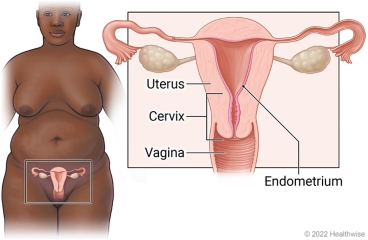
Endometrial ablation is a type of procedure that's often used to
treat heavy menstrual bleeding. It can also be used for other types
of bleeding in the uterus. It's not recommended if you plan to get
pregnant.
Ablation works by destroying the lining of the uterus (endometrium).
As it heals, the lining will scar. This scarring reduces or prevents
bleeding.
You may be given gonadotropin-releasing hormone agonists (GnRH-As) 1
to 2 months before endometrial ablation. This can help thin the
lining of the uterus before the procedure.
For the procedure, your doctor may give you medicine to help you
relax. You may also get medicine to help with pain. First, your
doctor places a tool called a speculum into your vagina. This opens
the vagina a little bit. Next, the doctor may put a lighted tube
through your cervix. This is called a hysteroscope or scope. It
helps the doctor see inside your uterus. Then the doctor inserts a
device to destroy the lining. This device may work in one of many
ways. It may use a laser beam, heat, electricity, freezing, or
microwaves.
Ablation can be done in a doctor's office. Or it may be done in a
hospital. It usually takes less than an hour. You can go home after
the procedure.
How do you prepare for the procedure?
Procedures can be stressful. This information will help you
understand what you can expect. And it will help you safely prepare
for your procedure.

Preparing for the procedure
|
|
|
|
|
|
|
|
|
|
|
-
Tell your doctor ALL the medicines, vitamins, supplements,
and herbal remedies you take. Some may increase the risk
of problems during your procedure. Your doctor will tell
you if you should stop taking any of them before the
procedure and how soon to do it.
|
|
|
|
What happens on the day of the procedure?
|

|
-
Follow the instructions exactly about when to stop eating
and drinking. If you don't, your procedure may be
canceled. If your doctor told you to take your medicines
on the day of the procedure, take them with only a sip of
water.
|
|
|
-
Take a bath or shower before you come in for your
procedure. Do not apply lotions, perfumes, deodorants, or
nail polish.
|
|
|
|
At the doctor's office or hospital
When should you call your doctor?
Current as of: November 27, 2023
Content Version: 14.0
Care instructions adapted under license by your healthcare
professional. If you have questions about a medical condition or
this instruction, always ask your healthcare professional.
Healthwise, Incorporated disclaims any warranty or liability for
your use of this information.