Duodenitis: Care Instructions
Overview
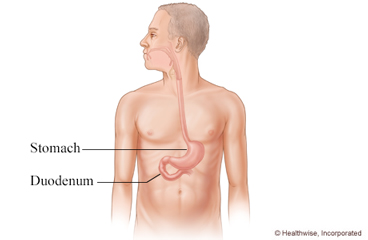
The duodenum (say "doo-AW-duh-num") is the first part of the small intestine. It connects to the stomach.
It's about 10 inches long and curved, almost forming a circle.
Duodenitis (say "doo-aw-duh-NY-tus") may feel like an upset stomach. It happens when something irritates the
lining of the duodenum. Many things can cause it. These include an infection or something you ate or drank.
Certain medicines or having a sore (ulcer) on the lining of the duodenum also can cause it. Your belly may
bloat and ache. You may belch, vomit, and feel sick to your stomach.
You should be able to relieve the problem by taking medicine. And it may help to change your diet. If the
problem lasts, your doctor may prescribe different medicine.
Follow-up care is a key part of your treatment and safety. Be sure to make and go to all
appointments, and call your doctor if you are having problems. It's also a good idea to know your test results
and keep a list of the medicines you take.
How can you care for yourself at home?
-
If your doctor prescribed antibiotics, take them as directed. Do not stop taking them just because you
feel better. You need to take the full course of antibiotics.
-
Be safe with medicines. If your doctor prescribed medicine to decrease stomach acid, take it as directed.
Call your doctor if you think you are having a problem with your medicine.
-
Do not take any other medicine, including over-the-counter pain relievers, without talking to your doctor
first.
-
If your doctor recommends over-the-counter medicine to reduce stomach acid, such as Pepcid AC (famotidine)
or Prilosec (omeprazole), follow the directions on the label.
-
To prevent dehydration, drink plenty of fluids. Choose water and other clear liquids until you feel
better. If you have kidney, heart, or liver disease and have to limit fluids, talk with your doctor before
you increase the amount of fluids you drink.
-
Limit how much alcohol you drink.
-
Avoid coffee, tea, cola drinks, chocolate, and other foods with caffeine. They increase stomach acid.
When should you call for help?
 Call 911
anytime you think you may need emergency care. For example, call if:
Call 911
anytime you think you may need emergency care. For example, call if:
Call your doctor now or seek immediate medical care if:
Watch closely for changes in your health, and be sure to contact your doctor if:
Current as of: October 19, 2023
Content Version: 14.0
Care instructions adapted under license by your
healthcare professional. If you have questions about a medical condition or this instruction, always ask
your healthcare professional. Healthwise, Incorporated disclaims any warranty or liability for your use of
this information.