Broken Heart Syndrome: Care Instructions
Your Care Instructions
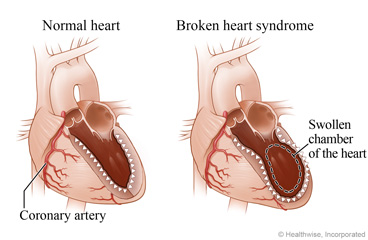
With broken heart syndrome, the heart has trouble pumping blood normally. A chamber of the heart swells up
like a small balloon. Broken heart syndrome is also called takotsubo (say "TACK-uh-zoo-boh") syndrome or
stress cardiomyopathy (say "kar-dee-oh-my-AWP-uh-thee").
Broken heart syndrome is often triggered by great emotional stress, such as grief after losing a loved one.
It can also be triggered by physical stress, such as having a serious health problem. Sometimes the cause is
not known.
Broken heart syndrome causes the same symptoms as a heart attack, but it's not a heart attack. Some of the
most common symptoms are:
-
Sudden chest pain.
-
Shortness of breath.
-
Fainting.
Other symptoms may include a pounding or fast heartbeat, nausea, or vomiting.
A heart attack is caused by a blockage in one or more of the coronary arteries. These arteries supply the
heart muscle with blood. But broken heart syndrome isn't caused by blocked coronary arteries.
You will likely take medicines for a short time to help your heart muscle recover. These may include
medicines that make it easier for your heart to pump blood. Some people may need to take medicines long-term.
In most people, the heart starts pumping normally again within a few days or weeks. For some people, it can
take several months to return to normal.
Follow-up care is a key part of your treatment and safety. Be sure to make and go to all
appointments, and call your doctor if you are having problems. It's also a good idea to know your test results
and keep a list of the medicines you take.
How can you care for yourself at home?
-
Be safe with medicines. Take your medicines exactly as prescribed. Call your doctor if you think you are
having a problem with your medicine.
-
If you take a blood thinner, be sure to get instructions about how to take your medicine safely. Blood
thinners can cause serious bleeding problems.
-
Lead a heart-healthy lifestyle. Here are some tips:
-
If your doctor recommends it, get more exercise. Walking is a good option for many. Bit by bit,
increase the time you're active every day. Try for at least 30 minutes on most days of the week.
-
Try to quit smoking. If you can't quit, cut back as much as you can. If you need help quitting, talk
to your doctor about stop-smoking programs and medicines. These can increase your chances of quitting
for good.
-
Eat a healthy diet that is low in saturated fat and salt and is full of fruits, vegetables, and whole
grains.
-
Stay at a weight that's healthy for you. Talk to your doctor if you need help with this.
When should you call for help?
 Call 911
anytime you think you may need emergency care. For example, call if:
Call 911
anytime you think you may need emergency care. For example, call if:
Call your doctor now or seek immediate medical care if:
Watch closely for changes in your health, and be sure to contact your doctor if you have
any problems.
Current as of: June 24, 2023
Content Version: 14.0
Care instructions adapted under license by your
healthcare professional. If you have questions about a medical condition or this instruction, always ask
your healthcare professional. Healthwise, Incorporated disclaims any warranty or liability for your use of
this information.