Septic Arthritis: Care Instructions
Your Care Instructions
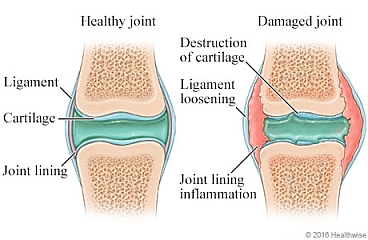
Septic arthritis is an infection in a joint. The infection can come from bacteria, fungus, or a virus. This
occurs when an infection from another part of the body, such as pneumonia or a skin or urinary tract
infection, travels through the bloodstream to the joint. It may also spread to the joint from an infection in
nearby soft tissue, or it can follow a surgery or injury. The joint is often warm, swollen, and tender.
Early treatment can prevent permanent damage to the joint. Treatment includes antibiotics and draining the
joint to remove the infection. Depending on which part of your body is infected, your doctor may drain the
joint with a needle or you may need surgery to drain the joint.
Follow-up care is a key part of your treatment and safety. Be sure to make and go to all
appointments, and call your doctor if you are having problems. It's also a good idea to know your test results
and keep a list of the medicines you take.
How can you care for yourself at home?
-
You will receive antibiotics through a vein (I.V.) at first. After this, you may take antibiotics by
mouth.
-
Take your antibiotics as directed. Do not stop taking them just because you feel better. You need to take
the full course of antibiotics.
-
Rest the joint as much as you can.
-
If possible, prop up the injured joint on pillows as much as possible for the next 3 days. Try to keep it
at or above the level of your heart. This can help reduce pain and swelling.
-
Follow your doctor's instructions on exercises for the affected joint.
-
Do not smoke. Smoking can make it harder for your body to fight the infection. If you need help quitting,
talk to your doctor about stop-smoking programs and medicines. These can increase your chances of quitting
for good.
When should you call for help?
 Call your
doctor now or seek immediate medical care if:
Call your
doctor now or seek immediate medical care if:
Watch closely for changes in your health, and be sure to contact your doctor if:
Current as of: June 12, 2023
Content Version: 14.0
Care instructions adapted under license by your
healthcare professional. If you have questions about a medical condition or this instruction, always ask
your healthcare professional. Healthwise, Incorporated disclaims any warranty or liability for your use of
this information.