Glomerulonephritis: Care Instructions
Overview
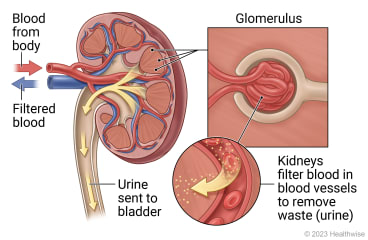
Glomerulonephritis (say "gluh-mair-yuh-loh-nih-FRY-tus") is inflammation of the many tiny filters in your
kidneys (glomeruli). A glomerulus is a cluster of blood vessels that filters fluid and waste from your body as
urine.
Depending on the cause of the inflammation, you may not have any symptoms. Or you may have foamy urine, high
blood pressure, or swelling in your face, feet, or hands.
Glomerulonephritis can be caused by an infection or some medicines. It can be caused by diseases like
diabetes or lupus. Sometimes the cause is not known.
This illness may get better with treatment. But it often leads to long-term (chronic) kidney disease.
Treatment may include:
-
Corticosteroid medicines. These reduce inflammation.
-
Immunosuppressive medicines. These reduce inflammation.
-
One or more medicines to lower your blood pressure.
-
Dialysis, in some cases. This is a treatment that does the work for your kidneys to filter waste from your
blood.
Follow-up care is a key part of your treatment and safety. Be sure to make and go to all
appointments, and call your doctor if you are having problems. It's also a good idea to know your test results
and keep a list of the medicines you take.
How can you care for yourself at home?
-
Take your medicines exactly as prescribed. Call your doctor if you have any problems with your medicine.
You will get more details on the specific medicines your doctor prescribes.
-
A dietitian can help you make an eating plan with the right amounts of salt (sodium), potassium, and
protein. You may also need to limit how much fluid you drink each day.
-
Do not take anti-inflammatory medicines such as ibuprofen (Advil, Motrin) and naproxen (Aleve). They can
make kidney problems worse. It is okay to take acetaminophen (Tylenol).
-
Seek support from family, friends, and a counselor if you need it. Long-term illnesses can be difficult
and stressful.
When should you call for help?
 Call 911
anytime you think you may need emergency care. For example, call if:
Call 911
anytime you think you may need emergency care. For example, call if:
Call your doctor now or seek immediate medical care if:
Watch closely for changes in your health, and be sure to contact your doctor if:
Current as of: October 11, 2023
Content Version: 14.0
Care instructions adapted under license by your
healthcare professional. If you have questions about a medical condition or this instruction, always ask
your healthcare professional. Healthwise, Incorporated disclaims any warranty or liability for your use of
this information.