Learning About Radiofrequency Treatments for Gastroesophageal Reflux Disease (GERD)
What are radiofrequency treatments for GERD?
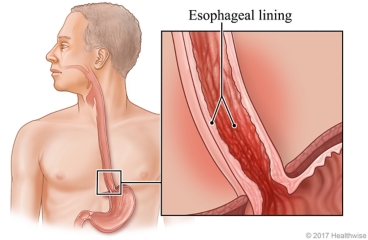
Radiofrequency (RF) treatments (like the Stretta procedure) mean that a doctor uses heat to treat the wall of
the esophagus. This can help if you have irritation in your esophagus from gastroesophageal reflux disease
(GERD).
GERD is the backward flow of stomach acid into the esophagus, the tube that carries food and liquid to your
stomach. A one-way valve prevents stomach acid from moving up into this tube. When you have GERD, this valve
does not close tightly enough.
If you have mild GERD symptoms, such as heartburn, you may be able to control the problem with
over-the-counter or prescription medicine. Changing your diet, losing weight, and making other lifestyle
changes can also help reduce symptoms.
If those treatments don't work, your doctor might recommend RF treatments.
How do radiofrequency treatments help with GERD?
When you have RF treatments, a doctor uses heat to treat tissue in the wall of the esophagus. As the tissue
heals, you may have fewer GERD symptoms. The symptoms may even go away.
Before the procedure, you will get medicines through a needle in your vein (I.V.) in your arm or hand. These
medicines reduce pain and will make you feel relaxed and drowsy. Your throat will also be numbed. You may not
remember much about the treatment.
During the procedure, the doctor will use a tool called an endoscope, or scope. It's a thin, flexible,
lighted viewing tool. It goes into the mouth and down the throat. Your doctor can use it to see the area that
will be treated.
Your doctor will find the area where the esophagus meets the stomach and will apply heat. The treatment may
take about half an hour.
What can you expect after radiofrequency treatments?
After the treatment, your esophagus may feel tight or narrow. You may have pain in your chest. You may also
feel bloated or have trouble swallowing.
You will be observed for 1 to 2 hours after the treatment until the medicines wear off. You should not eat or
drink until your throat is no longer numb. When you recover, you can go home.
Ask your doctor when you can drive again. Your doctor will tell you when you can go back to your usual diet
and activities. Do not drink alcohol for 12 to 24 hours after the test.
You may still need to treat some symptoms of GERD. Your doctor will give you information about that.
Follow-up care is a key part of your treatment and safety. Be sure to make and go to all
appointments, and call your doctor if you are having problems. It's also a good idea to know your test results
and keep a list of the medicines you take.
Current as of: October 19, 2023
Content Version: 14.0
Care instructions adapted under license by your
healthcare professional. If you have questions about a medical condition or this instruction, always ask
your healthcare professional. Healthwise, Incorporated disclaims any warranty or liability for your use of
this information.