Tailbone Injury in Children: Care Instructions
Overview
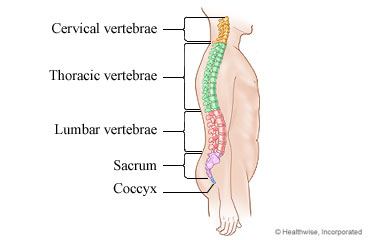
Injuries to the tailbone (coccyx) can occur when a child slips or falls and hits their tailbone. A tailbone
injury causes pain when your child sits, especially when slumping or sitting on a hard seat. Straining to have
a bowel movement can also be very painful. Tailbone injuries can take several months to heal, but home
treatment can ease the pain.
Follow-up care is a key part of your child's treatment and safety. Be sure to make and go to all
appointments, and call your doctor if your child is having problems. It's also a good idea to know your
child's test results and keep a list of the medicines your child takes.
How can you care for your child at home?
-
Give pain medicines exactly as directed.
-
If the doctor gave your child a prescription medicine for pain, give it as prescribed.
-
If your child is not taking a prescription pain medicine, ask your doctor if your child can take an
over-the-counter medicine.
-
Put ice or a cold pack on your child's tailbone for 10 to 20 minutes at a time. Try to do this every 1 to
2 hours for the next 3 days (when your child is awake) or until the swelling goes down. Put a thin cloth
between the ice and your child's skin.
-
You can switch between using ice and heat 2 to 3 days after the injury. Have your child take a warm bath
for 20 minutes, 3 or 4 times a day. Use a doughnut-shaped pillow or towel in the tub to pad the hard tub
surface.
-
Have your child sit on soft, padded surfaces. A doughnut-shaped pillow can take pressure off the tailbone.
-
Help your child avoid constipation, because straining to have a bowel movement will increase tailbone
pain.
-
Include fruits, vegetables, beans, and whole grains in your child's diet each day. These foods are
high in fiber.
-
Have your child drink plenty of fluids. If your child has to limit fluids because of a health problem,
talk with your doctor before you increase how much your child drinks.
-
Help your child get some exercise every day. Build up slowly to 30 to 60 minutes a day on 5 or more
days of the week.
-
Schedule time each day for a bowel movement. A daily routine may help. Ask your child to take time and
not strain when having a bowel movement.
-
Help your child follow the doctor's directions for stretching and other exercises that might help with
pain.
When should you call for help?
 Call your
doctor now or seek immediate medical care if your child has new or worse symptoms in the legs or
buttocks. Symptoms may include:
Call your
doctor now or seek immediate medical care if your child has new or worse symptoms in the legs or
buttocks. Symptoms may include:
Watch closely for changes in your child's health, and be sure to contact your doctor if:
Current as of: July 17, 2023
Content Version: 14.0
Care instructions adapted under license by your
healthcare professional. If you have questions about a medical condition or this instruction, always ask
your healthcare professional. Healthwise, Incorporated disclaims any warranty or liability for your use of
this information.