Your Child's Fiberglass Cast: Care Instructions
Overview
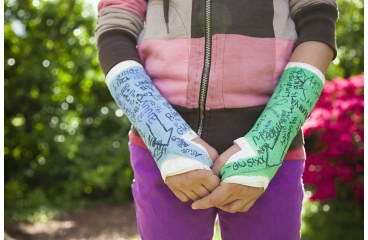
A cast protects a broken bone or other injury so it has time to heal. Most casts are made of fiberglass. When
your child wears a cast, you can't remove it yourself. A doctor or a technician will take it off.
Follow-up care is a key part of your child's treatment and safety. Be sure to make and go to all
appointments, and call your doctor if your child is having problems. It's also a good idea to know your
child's test results and keep a list of the medicines your child takes.
How can you care for your child at home?
General care
-
Follow the doctor's instructions for when your child can start using the limb that has the cast.
Fiberglass casts dry quickly and are soon hard enough to protect the injured arm or leg.
-
When it's okay to put weight on a leg or foot cast, don't let your child stand or walk on it unless it's
designed for walking.
-
Prop up the injured arm or leg on a pillow anytime your child sits or lies down during the first 3 days.
Try to keep it above the level of your child's heart. This will help reduce swelling.
-
Put ice or a cold pack on your child's cast for 10 to 20 minutes at a time. Try to do this every 1 to 2
hours for the next 3 days (when your child is awake). Put a thin cloth between the ice and your child's
cast. Keep the cast dry.
-
Ask your doctor if you can give your child acetaminophen (Tylenol) or ibuprofen (Advil, Motrin) for pain.
Be safe with medicines. Read and follow all instructions on the label.
-
Help your child do exercises as instructed by the doctor or physical therapist. These exercises will help
keep your child's muscles strong and joints flexible while the cast is on.
-
Remind your child to wiggle their fingers or toes on the injured arm or leg often. This helps reduce
swelling and stiffness.
Water and your child's cast
-
Try to keep your child's cast as dry as you can. The fiberglass part of the cast can get wet. But getting
the inside wet can cause problems.
-
Use a bag or tape a sheet of plastic to cover your child's cast when your child takes a shower or bath or
has any other contact with water. (Don't let your child take a bath unless your child can keep the cast out
of the water.) Moisture can collect under the cast and cause skin irritation and itching. It can make
infection more likely if your child had surgery or has a wound under the cast.
-
If your child has a water-resistant cast, ask the doctor how often it can get wet and how to take care of
it.
Skin care
-
Try blowing cool air from a hair dryer or fan into the cast to help relieve itching. Never stick items
under your child's cast to scratch the skin.
-
Don't use oils or lotions near your child's cast. If the skin gets red or irritated around the edge of the
cast, you may pad the edges with a soft material or use tape to cover them.
When should you call for help?
 Call your
child's doctor now or seek immediate medical care if:
Call your
child's doctor now or seek immediate medical care if:
Watch closely for changes in your child's health, and be sure to contact your doctor if:
Current as of: July 17, 2023
Content Version: 14.0
Care instructions adapted under license by your
healthcare professional. If you have questions about a medical condition or this instruction, always ask
your healthcare professional. Healthwise, Incorporated disclaims any warranty or liability for your use of
this information.